
Education
Govt Approves Privatisation of 70 Colleges: What It Means for Students and Education

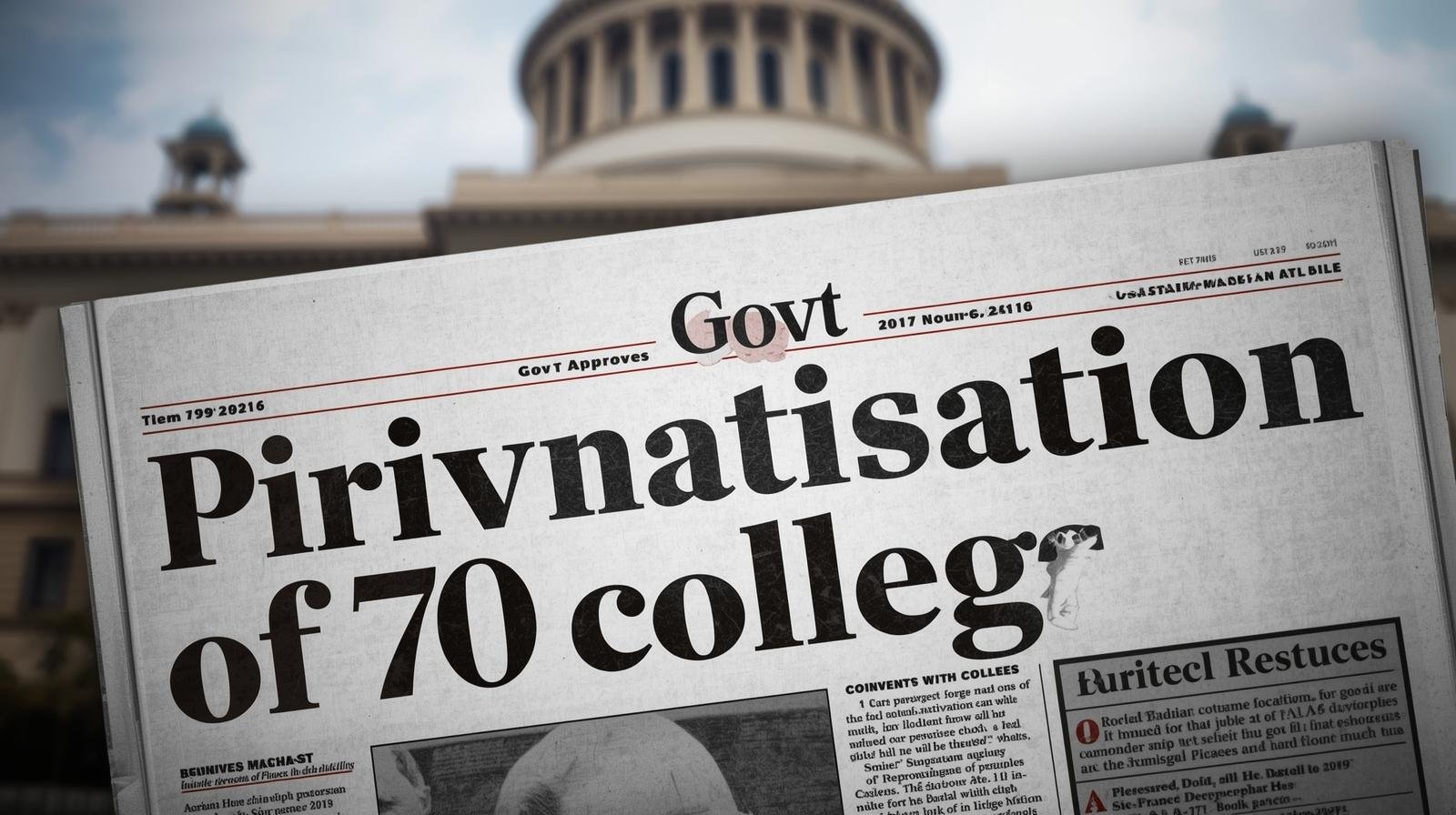
The government has officially approved the privatisation of 70 colleges, a decision that has sparked strong discussion across the education sector. Supporters see it as a step toward better management and improved quality, while critics worry about rising fees and reduced access for low-income students. This move is expected to bring major changes in how these colleges operate, fund themselves, and deliver education.
Privatisation of public institutions is not a new idea, but approving such a large number of colleges at once makes this decision especially significant. It directly affects thousands of students, teachers, and staff members.
Why the Government Approved Privatisation
According to officials, the main reason behind the privatisation of 70 colleges is poor performance and financial pressure. Many government-run colleges have been facing issues such as outdated facilities, staff shortages, and limited funding. The government believes private management can improve efficiency and reduce the financial burden on the state.
Another reason is accountability. Under private control, colleges are expected to manage resources better, introduce modern teaching methods, and focus more on results. The government argues that privatisation will help raise academic standards and align colleges with market needs.
How Privatisation Will Change College Management
Once privatised, these colleges will no longer be fully controlled by the government. Private operators or education groups will handle daily operations, hiring, infrastructure, and academic planning.
This change may allow colleges to:
- Upgrade classrooms and labs
- Introduce new courses
- Improve discipline and attendance
- Use modern teaching tools
However, critics argue that private owners may focus more on profit than education quality, which could affect long-term outcomes if strict regulations are not enforced.
Impact on Students
Students are the most affected by this decision. One major concern is tuition fees. Private colleges often charge higher fees than public institutions, which could make education less affordable for middle- and low-income families.
On the positive side, students may benefit from better facilities, improved teaching quality, and more career-focused programs. If managed properly, privatisation could lead to better learning environments and improved job prospects after graduation.
Scholarships and financial aid policies will play a crucial role in ensuring that deserving students are not pushed out of the education system.
Concerns of Teachers and Staff

Teachers and non-teaching staff have raised serious concerns about job security. Under private management, existing staff may face contract changes, salary adjustments, or even layoffs.
Many teachers fear that their service benefits, pensions, and job protections could be affected. Education unions have demanded clear policies to protect staff rights and ensure fair treatment during the transition process.
Public Reaction and Criticism
The decision to privatise 70 colleges has received mixed reactions. Some education experts support the move, saying it could modernize outdated institutions. Others strongly oppose it, calling it a step toward commercialization of education.
Parents and students have also expressed concerns about transparency and regulation. Without strict oversight, there is fear that private operators may compromise educational values for financial gain.
What Happens Next?
The success of this decision depends largely on implementation and regulation. Clear rules, strong monitoring, and student protection policies are essential. The government must ensure that private operators follow academic standards and keep education accessible.
If handled responsibly, privatisation could improve the quality of higher education. If not, it may widen the gap between rich and poor students.
Final thoughts
The government’s approval of the privatisation of 70 colleges marks a major shift in education policy. While the move aims to improve efficiency and quality, it also raises serious concerns about affordability, access, and job security. The coming months will be critical in determining whether this decision strengthens the education system or creates new challenges for students and educators alike.

The Crown Jewels of Gaming: Inside the UK’s Top 20 Casinos

Graduations, Pouch Pizza, Purchase Games, and ZipperGitsFh: A Modern Digital Culture Story

Unlock the Thrill: Why Independent Casinos Sites Are Better

The End of Forms: Why No-Registration Casinos Are Taking Over

The Best Online Casinos: Why Experience Matters More Than Luck

Understanding “inurl:home.htm intitle:1766” and Why People Search It

Home Gym Meteorology Shop: Evaluating Fitnara for Smart Fitness Choices

The Future of Gaming is in Your Hands: Why PayByMobile Casinos Change Everything

Discover the Elite: Why the Top 50 Online Casinos UK Set the Standard

Unleash the Thrill: Discover the Ultimate Experience at Basswin Casino
The Crown Jewels of Gaming: Inside the UK’s Top 20 Casinos
Graduations, Pouch Pizza, Purchase Games, and ZipperGitsFh: A Modern Digital Culture Story
Unlock the Thrill: Why Independent Casinos Sites Are Better
The End of Forms: Why No-Registration Casinos Are Taking Over
The Best Online Casinos: Why Experience Matters More Than Luck
Understanding “inurl:home.htm intitle:1766” and Why People Search It
Home Gym Meteorology Shop: Evaluating Fitnara for Smart Fitness Choices
The Future of Gaming is in Your Hands: Why PayByMobile Casinos Change Everything
Discover the Elite: Why the Top 50 Online Casinos UK Set the Standard