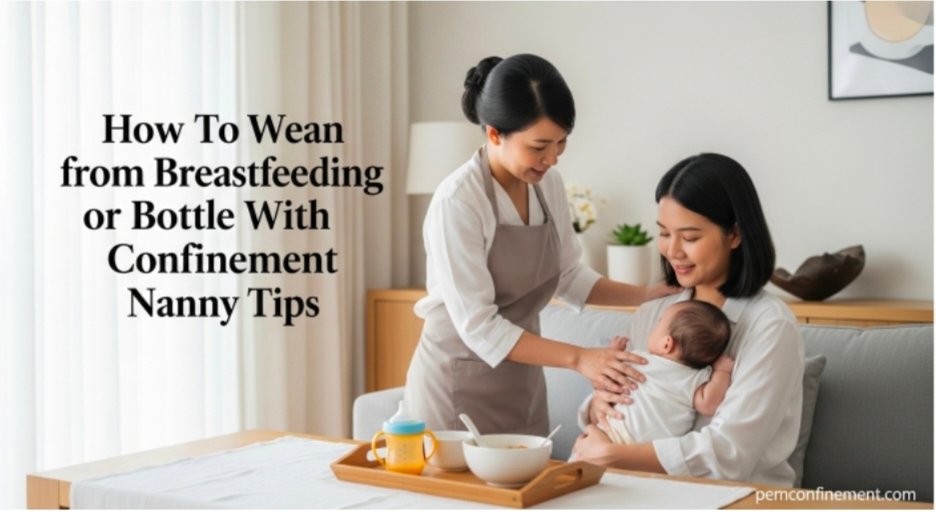
Weaning can feel emotional and surprisingly practical at the same time. Many mums start researching confinement nanny tips during pregnancy because they want a gentle plan that protects bonding, supports recovery, and keeps the baby settled during feeding changes.
Whether you plan to wean from breastfeeding, move from bottle to cup, or do a mix of both, your approach matters. A gradual transition usually reduces tears, refusal, and discomfort for mum and baby, especially in the confinement period when rest and routine make a big difference.
What “weaning” means (and why gradual is usually easier)
Weaning means gradually reducing milk feeds and replacing them with age-appropriate alternatives. For breastfeeding, gradual weaning helps reduce engorgement (breasts becoming painfully full) and supports comfort.
Health guidance commonly recommends exclusive breastfeeding for the first 6 months, then continuing breastfeeding alongside solids up to 2 years or beyond, if that works for mum and baby. That range shows why there is no single “correct” weaning age, only what fits your family.
If you are in Singapore and planning confinement support, it helps to choose a timeline before the baby arrives. A steady plan also lets your confinement nanny in Singapore stay calm and predictable.
When families typically wean from breastfeeding or bottle feeding
Different milestones suit different families, but two evidence-based ideas help with planning:
Breastfeeding weaning often works best when you reduce one feed at a time, every few days, so your body can adjust.
Bottle weaning often completes between 12 and 18 months. Prolonged bottle use can increase the risk of tooth decay and may affect feeding habits and oral development.
If your baby was born early, has feeding difficulties, or struggles with weight gain, discuss your weaning plan with a doctor or lactation consultant before making big changes.
Confinement nanny support: what help looks like in real life
During confinement, you want practical help that matches your goals, not pressure. PEM nannies support you with day and night baby care, breastfeeding guidance, bottle preparation, and soothing routines so the baby feels secure as their feeding schedule changes.
PEM brings 30+ years of industry experience, with 550+ nannies who have served 50,000+ mothers. Every nanny completes 150 hours of training based on modules reviewed by a leading mum-and-baby expert, so the support stays consistent and structured.
If you want to understand how this support fits into your post-birth plan, you can learn more about PEM’s services here.
How to wean from breastfeeding gently (step-by-step)
A calm breastfeeding wean usually succeeds when you reduce feed gradually and maintain comfort.
Pick the easiest feed to drop first Many mums start with a midday feed because the baby often accepts distractions and snacks more easily during the day.
Replace one feed every few days If the baby is under 12 months, a replacement may be formula or expressed milk, depending on your plan. If the baby is 12 months or older, you may use a cup with water and offer milk choices recommended by your child’s clinician.
Adjust your body comfortably If you feel overly full, express a small amount for comfort rather than fully emptying the breast. This helps signal your body to gradually reduce production.
Keep the bedtime feed for last (for many families) The final feeds often carry the most comfort. Your confinement nanny can help build a new wind-down routine so bedtime stays smooth.
Offer closeness in other ways Keep cuddles, skin-to-skin, rocking, and quiet singing consistent. Babies often accept weaning better when the connection stays steady.
How to wean from a bottle (and protect teeth)
If bottle-feeding is part of your routine, plan a structured transition to cup-feeding.
A practical approach many parents use:
Start offering a cup at mealtimes from around 6 months, once solids begin, and the baby can practise sipping.
Drop non-meal bottles first, especially comfort bottles that happen out of habit.
Avoid sending the baby to sleep with a bottle, as milk pooling around the teeth can increase the risk of cavities.
If needed, slowly dilute the contents of the bottle while offering a more appealing cup at meals.
Your Singapore confinement lady often plays a key role here by keeping sterilising, preparation, and timing consistent, especially when you are resting or recovering from delivery.
A simple, realistic weaning timeline (example)
Every baby responds differently, but this structure keeps change manageable.
Week
Breastfeeding change
Bottle change
What your nanny can do
1
Replace 1 daytime feed
Offer a cup at 1 meal
Track cues, keep soothing consistent
2
Replace a second feed
Drop 1 non-meal bottle
Support naps, manage settling without feeding
3
Keep comfort feeds, reduce as ready
Encourage cup daily
Maintain routine, assist with cleaning and prep
4
Review and stabilise
Work towards fewer bottles
Adjust the schedule gently based on the baby’s mood
If the baby refuses strongly for several days, pause and hold steady before changing the next feed. Consistency beats speed.
Confinement Nanny Tips that reduce refusal and tears
These practical habits often make the biggest difference during weaning:
Use a predictable eat-play-sleep rhythm so the baby does not rely on feeding for every transition.
Keep feeding locations consistent for a week or two, especially for cup practice.
Offer solids before milk for older babies who already eat well, if that suits your paediatric guidance.
Rotate soothing methods (patting, rocking, walking, white noise) so feeding is not the only comfort tool.
Watch for hunger cues early. An overtired baby often refuses new feeding methods.
If you breastfeed, your nanny can also support you by keeping you well-fed and hydrated. PEM nannies cook confinement food and tonic soups as part of the job scope, which many mums find helpful during milk supply changes.
Herbal baths and herbal packages during weaning
Some mums like a consistent recovery routine while feeding changes happen. PEM nannies prepare herbal bath water as part of confinement care.
If you choose an herbal package, PEM nannies are trained to prepare it, and mothers can add it on at a special rate. Ask early so you can plan what to stock at home.
Common weaning challenges (and what to do)
Breast discomfort Engorgement can happen during breastfeeding weaning. Reduce feeds slowly and express only for comfort. If you develop a fever, severe pain, or feel unwell, seek medical advice promptly.
Baby protests and clinginess Expect some extra clinginess when comfort feeds change. Increase physical comfort and keep routines steady for a few days before reducing another feed.
Family mixed messages Agree on the plan with your partner or caregiver. When everyone responds the same way, the baby adapts faster.
Planning your support with PEM
The best time to map your weaning preferences is during pregnancy, when you can think clearly about what matters most: feeding goals, rest, and the kind of day and night baby care you want at home. PEM also guarantees the nanny’s arrival, which helps you plan your postpartum support with confidence.
If you want help planning a calm weaning routine as part of your confinement care, request details here.
A steady plan, consistent routines, and the right hands-on support can make weaning feel calmer for both you and baby. Enquire Now or Get a Free Quote.